Invalidity Distribution (DoIPD)
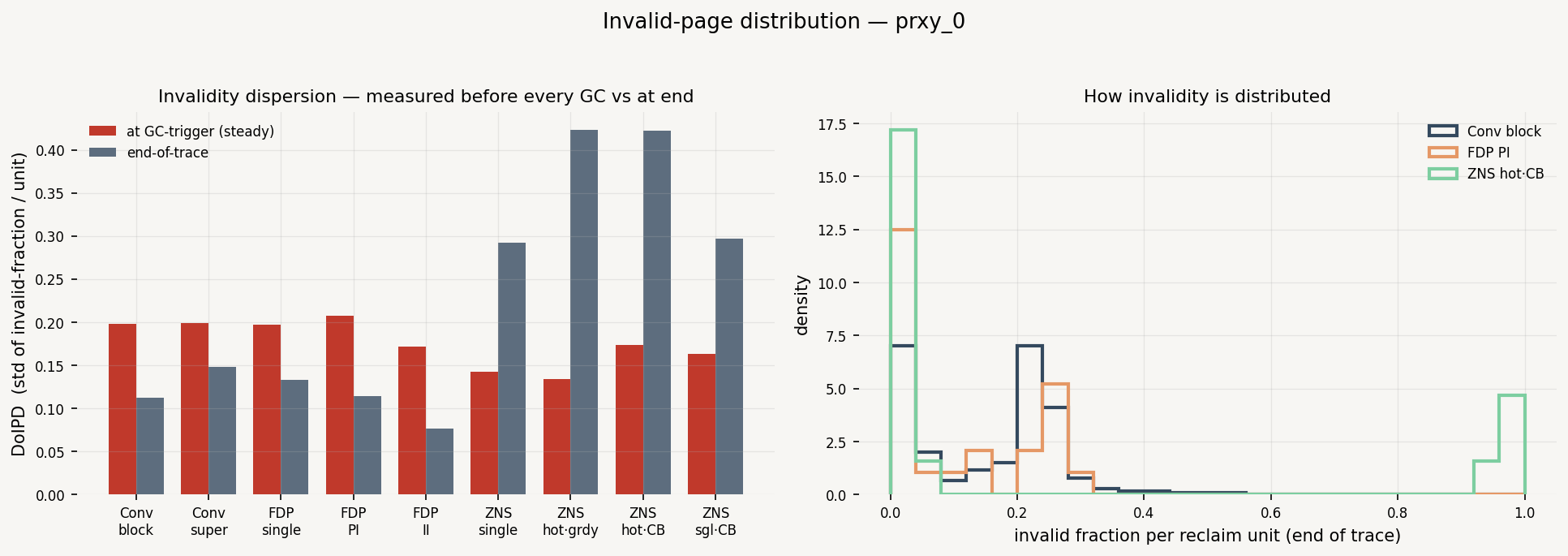
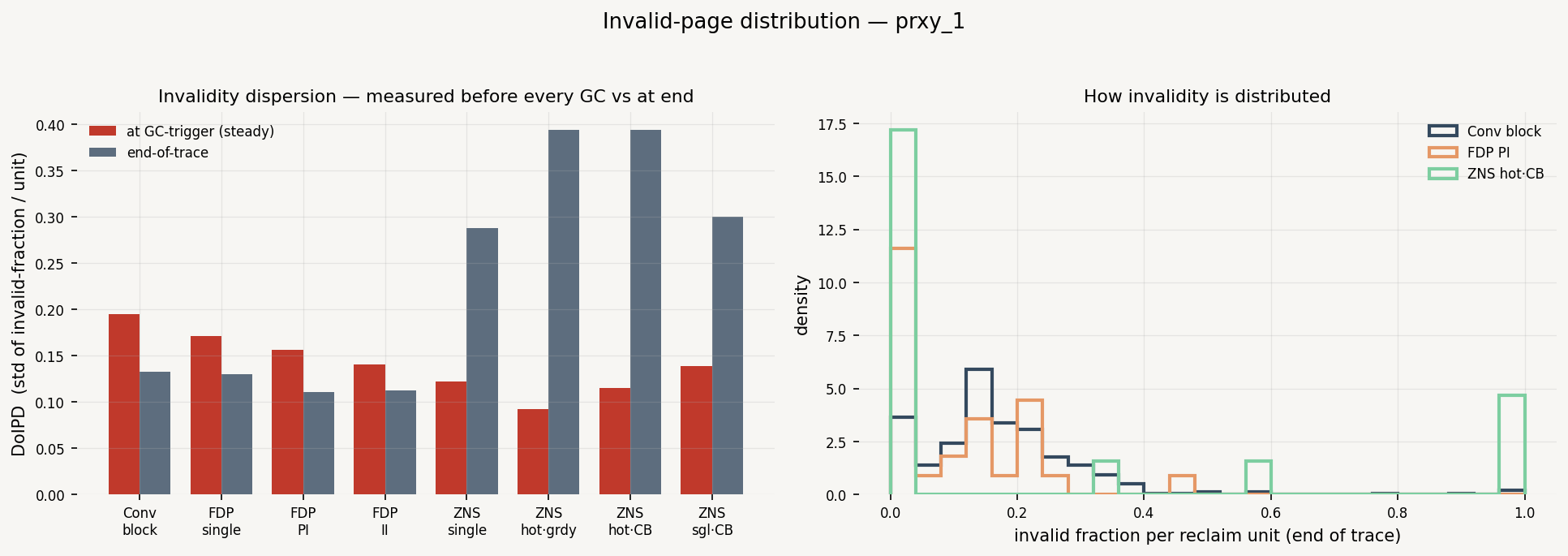
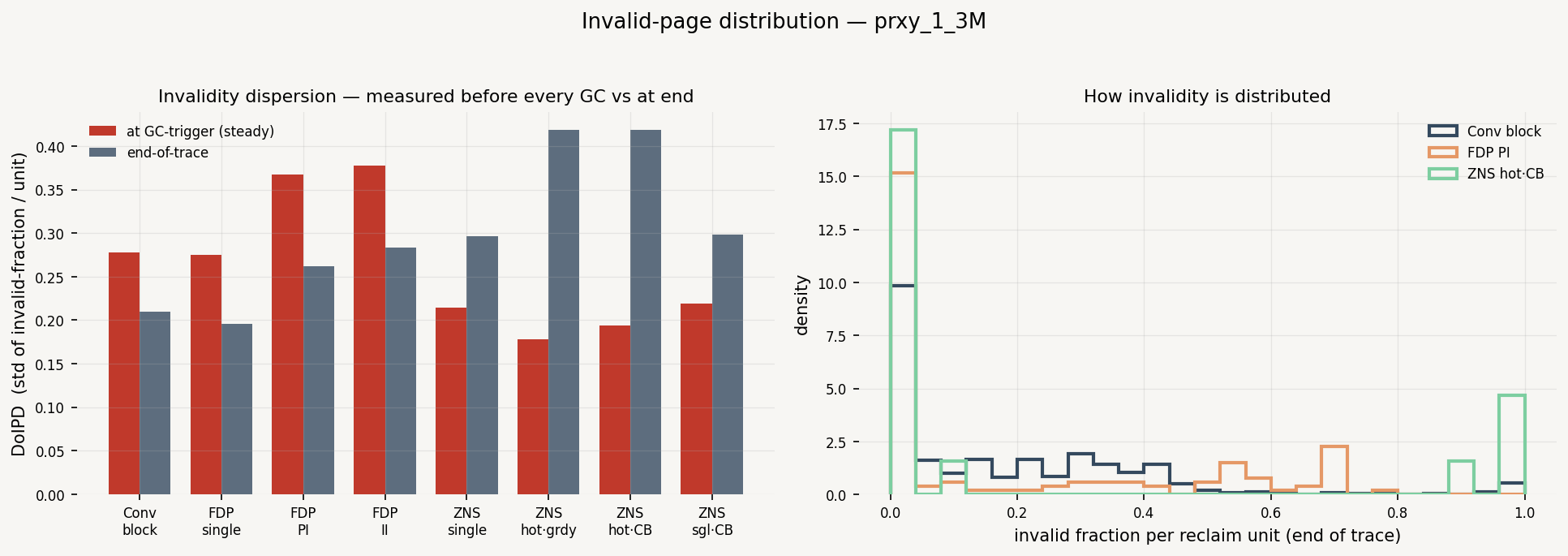
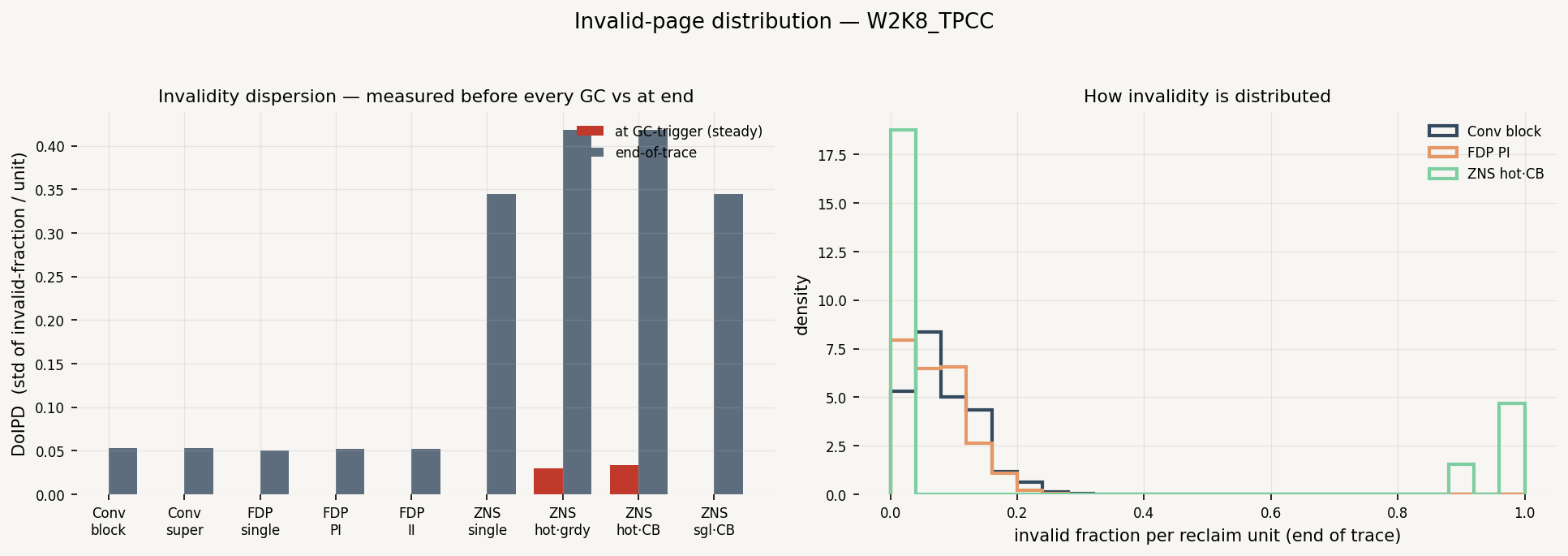
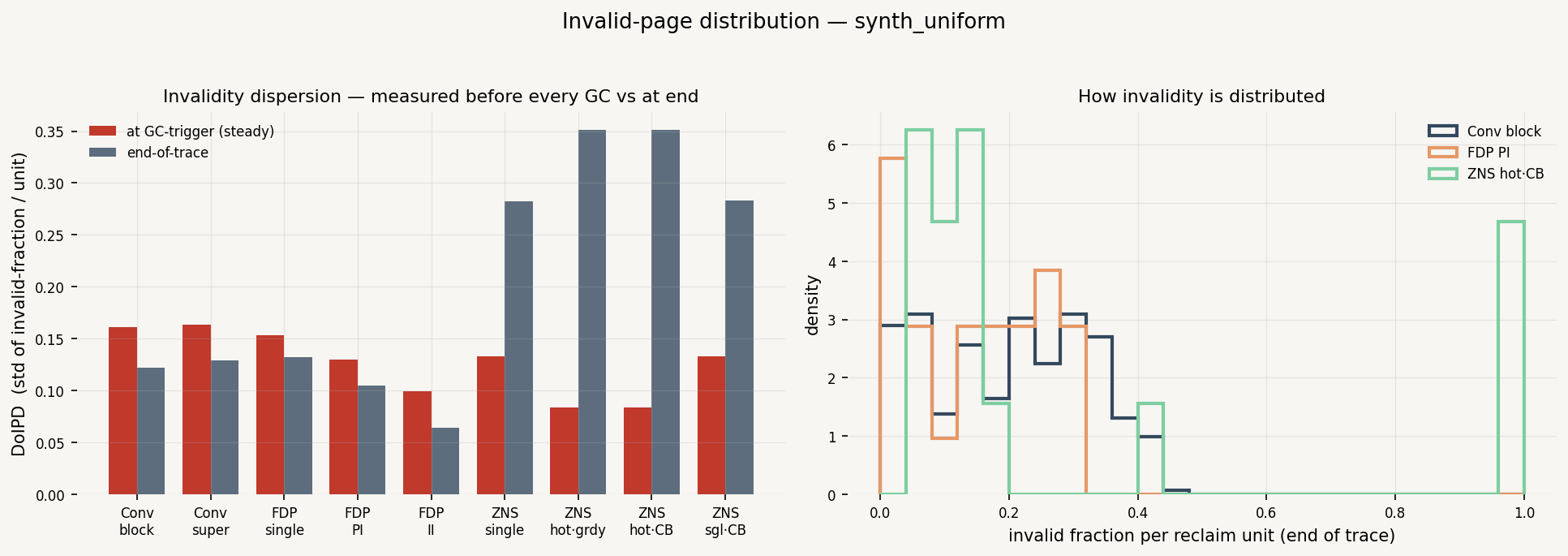
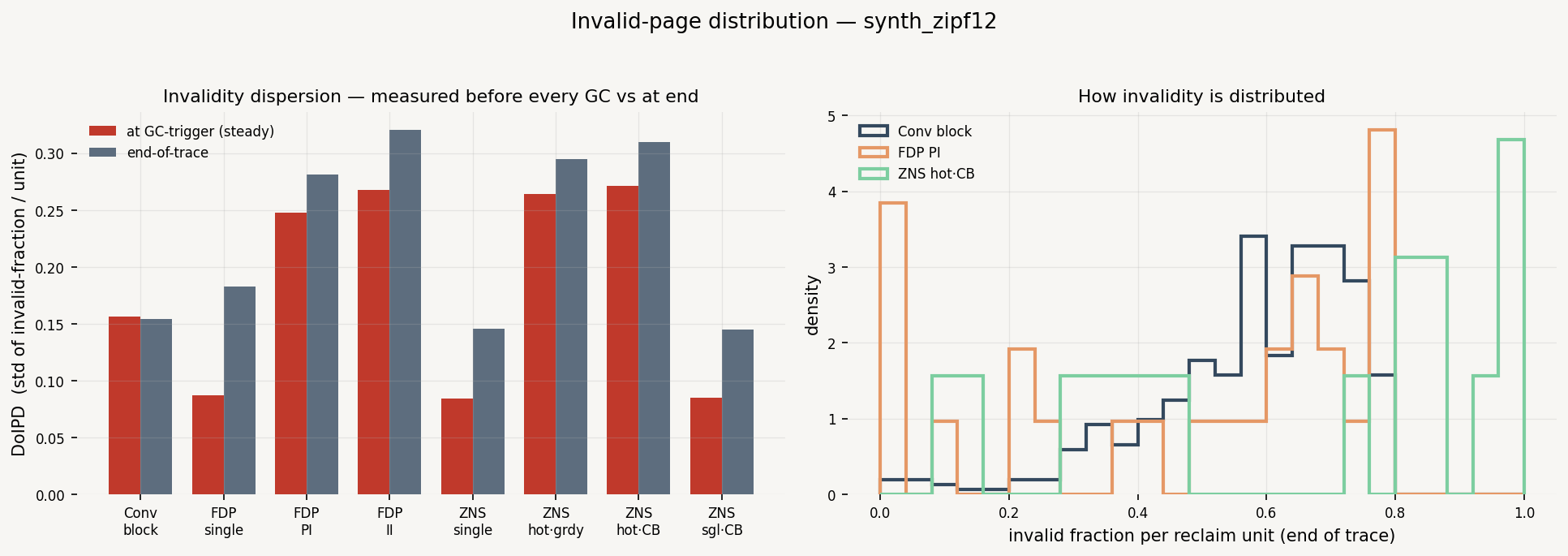
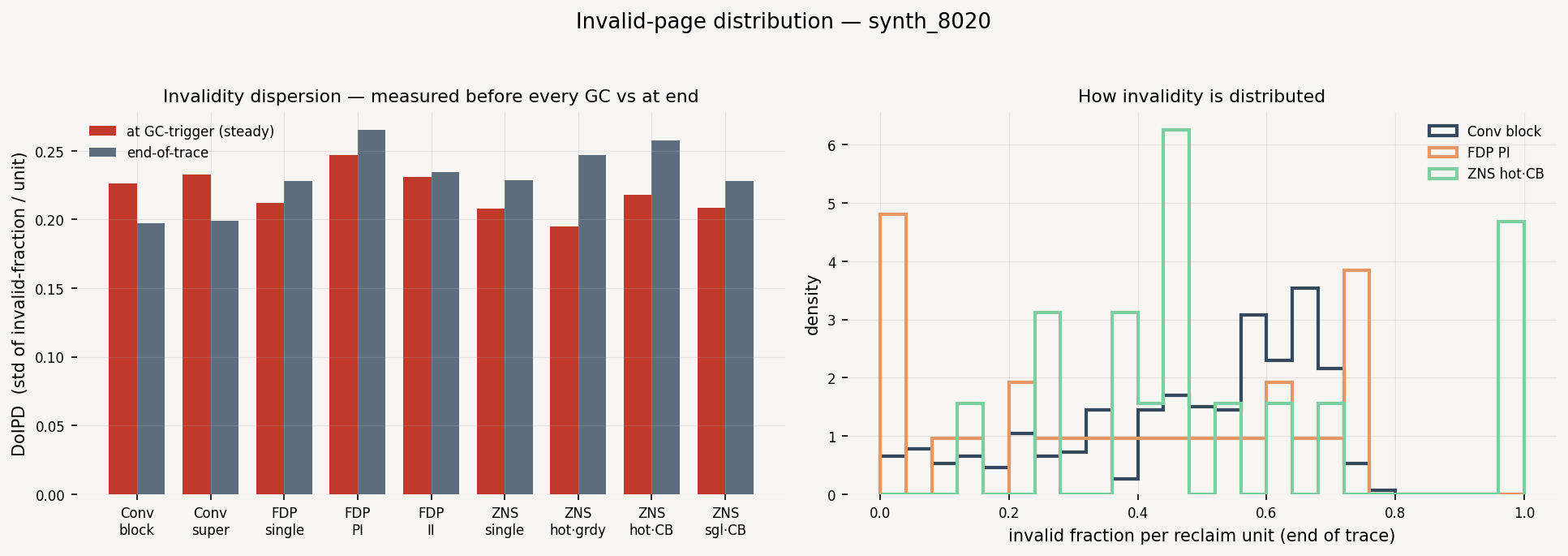
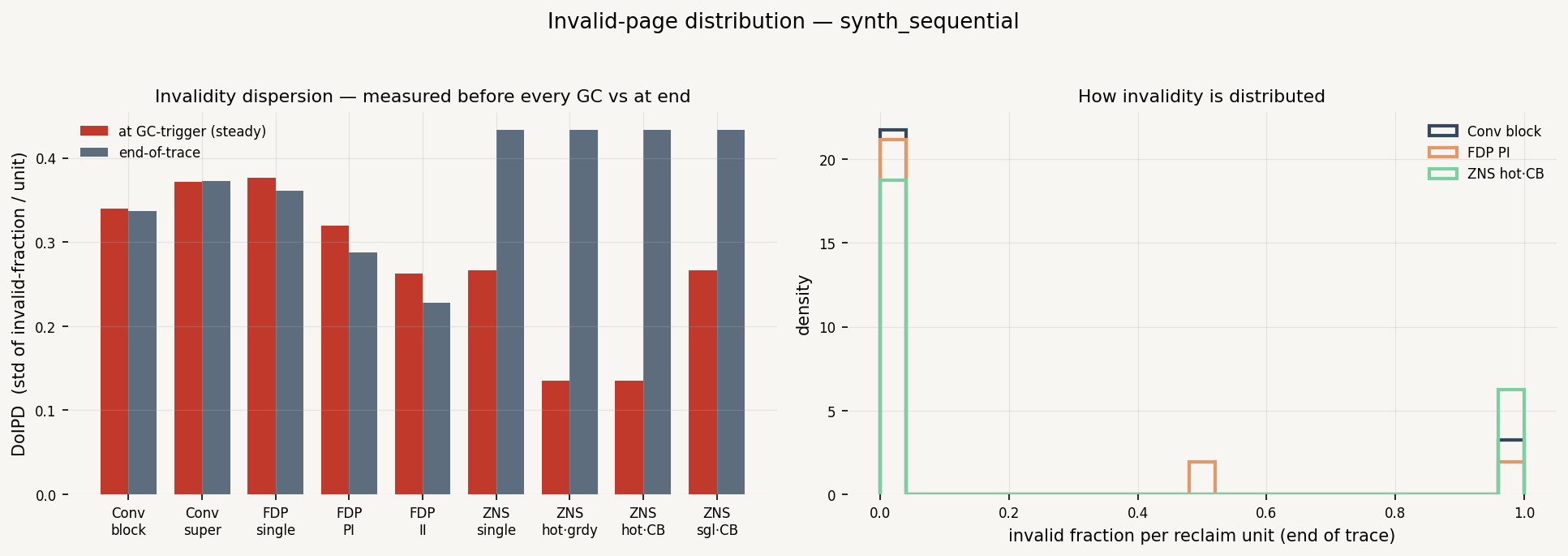
Our finding. How invalid pages are spread across the device (DoIPD) is a real signature of a placement policy — but only when measured at the right moment. Sampled before every GC trigger it reflects the steady state the FTL actually works against; sampled only at end-of-trace it understates the dispersion (the device looks calmer once writing stops). Spatial dispersion tracks WAF loosely (r ≈ +0.55).
How this helps our work. It gives us a principled, correctly-measured metric for the spatial side of the distribution study, and it sets up the key comparison: this spatial dispersion versus the temporal valid-at-reclaim measure that governs WAF far more tightly (Mechanism Scatters).
What it shows. Left: DoIPD (spread of invalid pages across units) measured at GC-trigger vs at end-of-trace. Right: histograms of the invalid-fraction per unit.
- Measuring at end-of-trace understates dispersion. The at-GC-trigger DoIPD is consistently higher than the end-of-trace value on active workloads — the device looks calmer once writing stops than it is during steady-state GC.
- Dispersion alone doesn't set WAF. Across all runs DoIPD correlates with WAF at only r ≈ +0.55 — useful context, but weaker than the temporal predictor (r = +0.92).
- Skewed workloads (Zipf, 80/20) show wide invalidity spread yet low WAF, because their hot pages die together regardless of how mixed the layout looks.